Best VibeAppScanner Alternative for AI-Built Apps
- Focus
- Comparison
- Risk
- High
- Stack
- Supabase/Next.js
- Detection
- Ubserve Runtime Simulation
A side-by-side comparison of VibeAppScanner and Ubserve across pricing tiers, scan depth, and launch-readiness confidence.
VibeAppScanner is attractive for low-cost early scanning. Ubserve is built for higher-confidence release decisions before real traffic.




Secure your vibe-coded app with Ubserve
- ✓Takes less than 60 seconds
- ✓100+ security checks run through your app
- ✓Plain English explanations for each issue
- ✓AI fix prompts for every issue
Quick Answer: Is VibeAppScanner or Ubserve Better for AI-Built Apps?
Choose VibeAppScanner if you want very low-cost scanning while exploring ideas and testing early builds.
Choose Ubserve when your app is near production and you need confidence in exploitable risk before growth traffic.
Both scan a live URL, so both are bounded by what black-box testing can observe. The OWASP Web Security Testing Guide sets out what that method can and cannot prove.
VibeAppScanner vs Ubserve: Quick verdict
| If this is your reality | Better fit | Ubserve's advantage |
|---|---|---|
| Cost-sensitive early experimentation | VibeAppScanner | Stronger release-confidence decision output |
| You are preparing for production users and payments | Ubserve | Prioritizes exploitable auth/data/key risk |
| You want quick scans first, deeper checks later | Both in sequence | Better final launch gate |
What you need to know
VibeAppScanner publicly positions as a low-friction, low-cost scanner for AI-built apps.
That is useful when teams want quick signal and minimal spend.
Ubserve is built for a different phase.
It is optimized for the moment when a founder needs to decide whether to ship, delay, or fix based on exploitable release risk.
Pricing fit: Start with the free URL scan. If it finds issues, Starter ($25/mo, or $19/mo billed annually), Pro ($49/mo, or $35/mo billed annually), or a $39 one-time report unlock give you the full report, exact fix prompts, PDF export, and deeper audit coverage.
Features, depth, and pricing fit
| Category | VibeAppScanner | Ubserve |
|---|---|---|
| Pricing posture | Low-cost entry tiers | Free URL scan preview; paid full reports, fix prompts, and audits |
| Primary use moment | Early-stage quick scans | Pre-launch and release-stage validation |
| Product narrative | Fast "vibe app" scanning utility | Exploitability-first release assurance |
| AI tool context | Bolt.new/Cursor/Lovable ecosystem scanning | Same ecosystem plus launch-risk prioritization |
| Core risk output | Lightweight vulnerability signal | Attacker-relevant exploitability confidence |
| Fit for production release decisions | Limited by depth expectations | Core product intent |
Detailed workflow comparison
VibeAppScanner workflow
VibeAppScanner works well when teams need low-friction, low-cost scans during early build phases.
It is useful for quick checks while features and architecture are still changing rapidly.
Ubserve workflow
Ubserve is aimed at release-readiness confidence.
It is used when the app is close to production and exploitability mistakes can directly affect users and revenue.
Pricing fit by team stage
| Team stage | Typical need | Better fit |
|---|---|---|
| Prototype phase | Cheapest fast signal | VibeAppScanner |
| Pre-launch validation | High-confidence risk decision | Ubserve |
| Early monetization phase | Avoid auth/data incident risk | Ubserve |
| Ongoing low-budget experimentation | Lightweight recurring scans | VibeAppScanner |
Edge cases that usually decide the tool
- Features pass lightweight checks but expose cross-tenant data reads under edge role paths.
- Generated routes allow object-level access without ownership validation.
- Production-bound builds leak Stripe API Secret Keys through runtime config mistakes.
These are inflection-point failures where founders typically move from low-cost scan cadence to deeper release validation.
Migration path from lightweight scanning
- Keep lightweight scans during prototype and early iteration.
- Add Ubserve before launch, paid growth, or major customer onboarding.
- Prioritize fixes by attacker impact on data exposure and billing abuse.
Pros and cons
VibeAppScanner
| Pros | Cons |
|---|---|
| Low-cost starting point for early scanning. Quick onboarding for builders experimenting with AI app generators. Useful for lightweight recurring checks. |
Low-cost scan tiers can be insufficient for high-stakes launch decisions. Teams may still need deeper exploitability validation before go-live. Early-stage utility does not always equal production confidence. |
Ubserve
| Pros | Cons |
|---|---|
| Built for release-stage decision quality. Focuses on severe exploitable paths over broad low-context noise. Strong fit when user trust and billing integrity are on the line. |
Not positioned as the cheapest lightweight scanner. Narrower than broad or hobby-first scan utilities. Best value appears close to production milestones. |
Why teams switch from VibeAppScanner to Ubserve
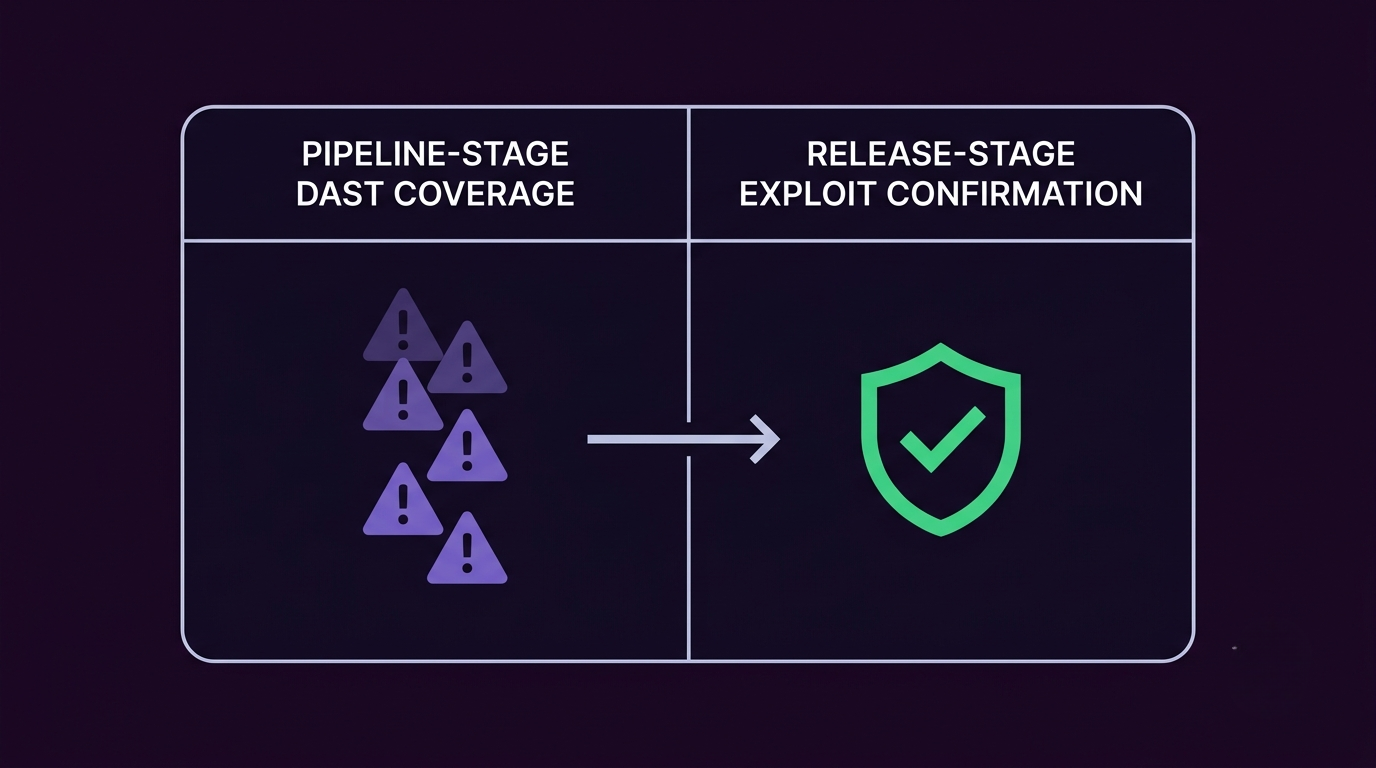
Teams usually switch when the app is no longer a prototype.
Once real users arrive, "quick scan passed" is not enough confidence.
At that point, founders care about concrete abuse outcomes:
Supabase RLS bypass, BOLA/IDOR vulnerabilities in generated endpoints, and exposed Stripe API Secret Keys in runtime-visible paths.
Who should use which
Choose VibeAppScanner if
- You are in early prototype mode.
- Budget is your strongest constraint.
- You want basic signal while exploring product fit.
Choose Ubserve if
- You are near production traffic or running paid acquisition.
- You need clear exploitability confidence before shipping.
- You want output focused on real attack impact, not just scan count.
Run a free URL scan. If it finds issues, paid plans unlock the full report, exact AI fix prompts, PDF export, and deeper audit coverage.
About the author

I'm Samuel, known online as Mr. Ballaz. I build Ubserve, a security scanner for apps built with AI tools like Cursor, Bolt, Lovable, and Supabase. Before Ubserve, I did manual security audits by hand — checking auth, exposed keys, and RLS policies one by one. Ubserve is that manual audit, automated, running in under 60 seconds instead of days.
Related resources
FAQs
How do I know when lightweight scanning is no longer enough?+
Can this still work for lean teams without security specialists?+
What helps most when preparing for real user traffic?+
When is VibeAppScanner still a reasonable option?+
What should I focus on before scaling paid acquisition?+
Looking for a better alternative to VibeAppScanner?
Ubserve helps founders and teams validate exploitable risk in AI-built apps with attacker-first checks, clear fix guidance, and release confidence in one workflow.