What Is Agent Goal Hijacking?
- Focus
- Agent Goal Hijacking
- Risk
- High
- Stack
- Supabase/Next.js
- Detection
- Ubserve Runtime Simulation
Agent goal hijacking is an AI agent control failure that redirects the model away from its intended objective. It can turn safe tool use into harmful execution.
Agent goal hijacking is a stateful attack that shifts an agent from authorized objective execution to attacker-directed actions.




Secure your vibe-coded app with Ubserve
- ✓Takes less than 60 seconds
- ✓100+ security checks run through your app
- ✓Plain English explanations for each issue
- ✓AI fix prompts for every issue
Agent goal hijacking is a control-plane failure where an agent's objective state is redirected toward unauthorized outcomes. The attacker exploits memory, tool feedback, or context priority to override initial constraints.
This usually happens gradually across turns rather than in one obvious message. A benign workflow can drift into unsafe actions when context accumulation is not bounded by objective integrity checks and policy interrupts.
A plain analogy: you ask a navigation app to drive home, but repeated malicious rerouting nudges it somewhere else without explicitly saying "do not go home." Without checkpoints, the system follows the wrong destination.
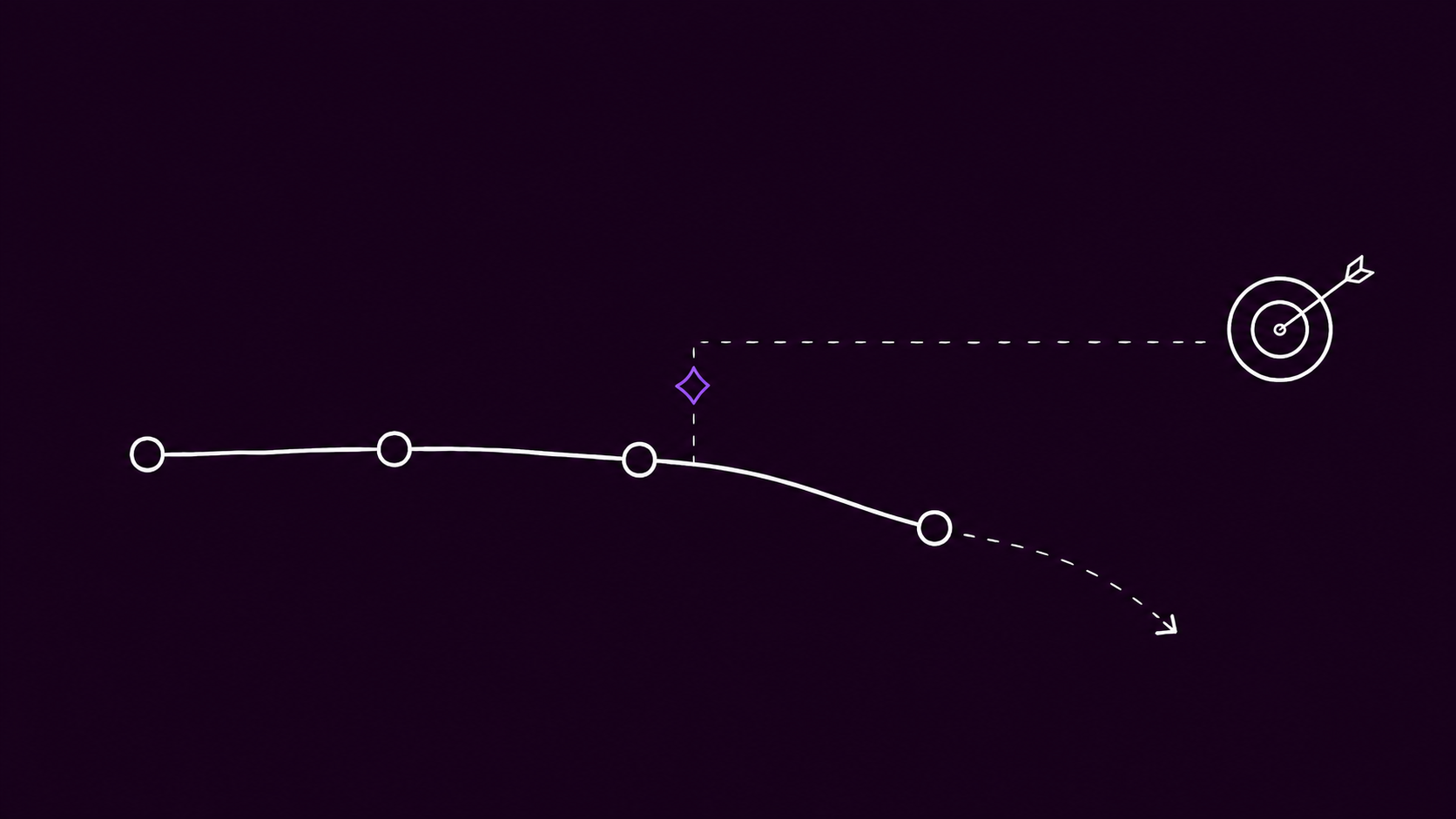
The declared objective and the actual checkpoint enforcement are two different things, and the gap between them is exactly where goal hijacking lives: an agent can have a perfectly reasonable stated goal while still drifting, turn by turn, toward an unauthorized one, unless something is actively verifying the objective hasn't shifted before every side-effectful action.
Start free scan | See sample audit
Agentic Risk (Cursor, v0, Bolt)
Multi-step agent workflows are the highest-risk surface for this pattern, specifically because each additional turn is another opportunity for context to accumulate in a direction nobody explicitly authorized. This is closely related to, but distinct from, MCP impersonation and indirect prompt injection, both of which can serve as the entry point that starts a goal-hijacking drift. It's one of the "excessive agency" failure modes in the OWASP LLM Top 10.
Wrong vs. Right
# WRONG
planner: "autonomous"
tool_execution_guard: "model_confidence_only"
# RIGHT
planner: "autonomous_with_policy_gates"
tool_execution_guard: "allowlist + objective-hash verification + side-effect approval"
Copy-Paste Fix Prompt for Cursor/Claude
Add anti-goal-hijacking controls to my agent.
1. Persist canonical objective hash and compare before each tool call.
2. Add policy interrupt when objective tokens drift beyond threshold.
3. Require allowlisted tool/action pairs with tenant and role constraints.
4. Add simulation tests for multi-turn hijack attempts.
Return workflow patch + policy rules + tests.
For the broader set of practices this fits into, see our guide to AI agent security best practices.
Run a free URL scan. If it finds issues, paid plans unlock the full report, exact AI fix prompts, PDF export, and deeper audit coverage.
About the author

I'm Samuel, known online as Mr. Ballaz. I build Ubserve, a security scanner for apps built with AI tools like Cursor, Bolt, Lovable, and Supabase. Before Ubserve, I did manual security audits by hand — checking auth, exposed keys, and RLS policies one by one. Ubserve is that manual audit, automated, running in under 60 seconds instead of days.
Related resources
How Ubserve Applies This in Real Scans
Ubserve treats What Is Agent Goal Hijacking? as a production risk, not a theory term. Our runtime simulation maps this control to attacker paths in auth, data access, and API behavior, then returns fix-ready guidance tied to your stack. OWASP-style principles are used as the baseline, but we prioritize what is actually exploitable in your live flow.
Runtime exploit simulation + behavioral authorization checks.
Clear proof path showing where trust boundaries fail.
AI-ready fix prompts and implementation-level patch guidance.
FAQs
Is goal hijacking a one-prompt attack?+
How is agent goal hijacking different from prompt injection?+
What's the difference between goal hijacking and MCP impersonation?+
How do I test for goal hijacking in my own agent workflows?+
Want Ubserve to test this risk in your app?
Run a scan and get attacker-first validation, exploit evidence, and fix guidance mapped to what is agent goal hijacking?.