01Security GlossaryApril 9, 2026
What Is JWT Token Forgery and Claim Spoofing?
JWT claim spoofing occurs when token claims are trusted without robust signature, issuer, audience, and context validation.
Short, quotable explanations of the security terms AI-assisted product teams keep running into. Each entry translates jargon into practical release risk.
JWT claim spoofing occurs when token claims are trusted without robust signature, issuer, audience, and context validation.
RBAC controls by role, ABAC by attributes, and FGAC by fine-grained object/field-level policy enforcement.
Stripe secret key exposure occurs when privileged API credentials become reachable from frontend, logs, or insecure server responses.
Most AI agent security incidents happen in execution, not reasoning. Scoped permissions, context provenance, and runtime policy enforcement are what actually contain the blast radius.
The OWASP LLM risk model maps practical exploit classes such as prompt injection, excessive agency, and tool-chain trust failures.
Server Actions are server-executed functions, but they still require explicit authorization and input ownership validation.
Service-role key exposure grants bypass-level access and can invalidate row-level protections if leaked to client or logs.
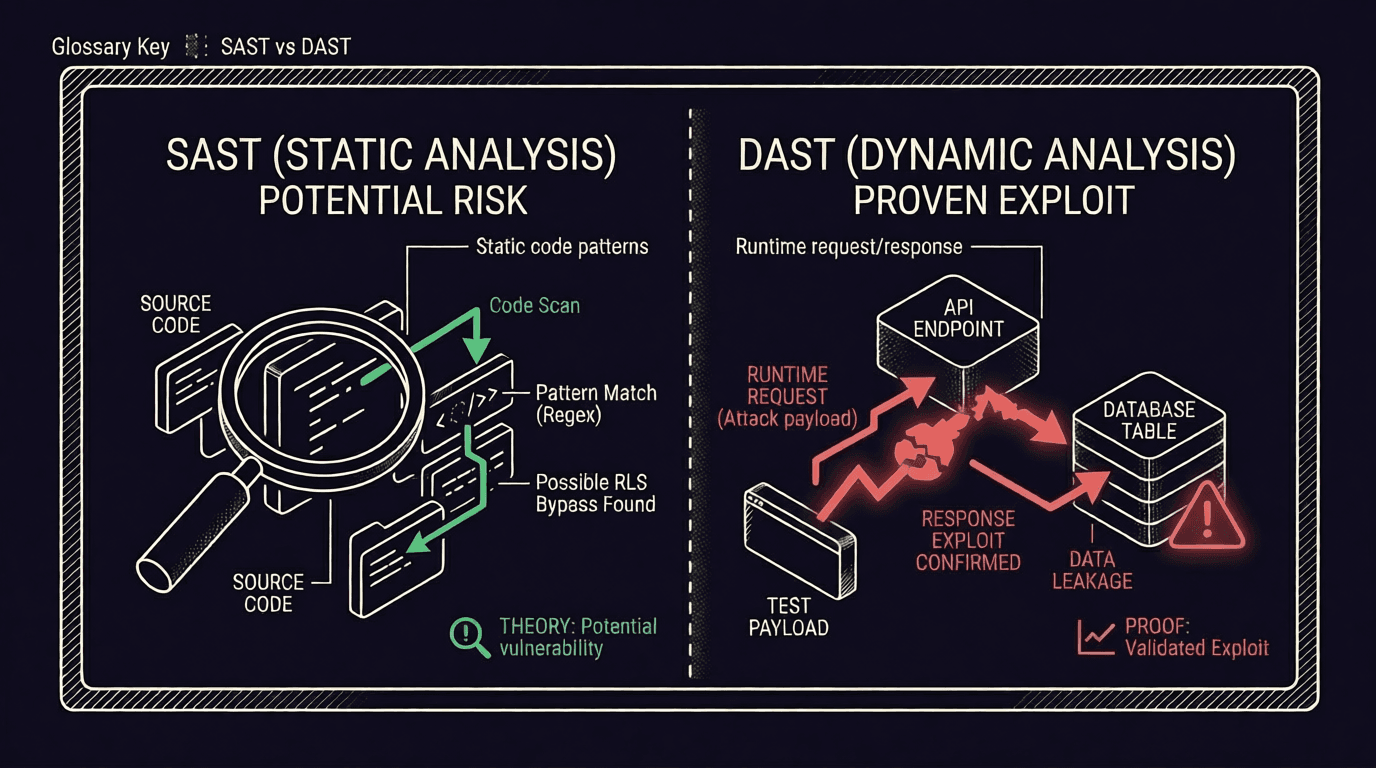
SAST identifies potential insecure patterns in code; DAST validates exploitability in running application behavior.
It separates theoretical findings from real release blockers by executing attacker-like requests against your live app instead of only pattern-matching source code.
MCP impersonation is an attack where a rogue server mimics a trusted tool endpoint to intercept or manipulate agent traffic.
Agent goal hijacking is a stateful attack that shifts an agent from authorized objective execution to attacker-directed actions.
Indirect prompt injection occurs when malicious instructions hidden in external data are executed by an agent as trusted context.
Broken access control means authenticated users can perform actions or access resources outside their intended privilege boundary.
BOLA happens when changing an object ID grants access to data or actions outside the authenticated actor's scope.
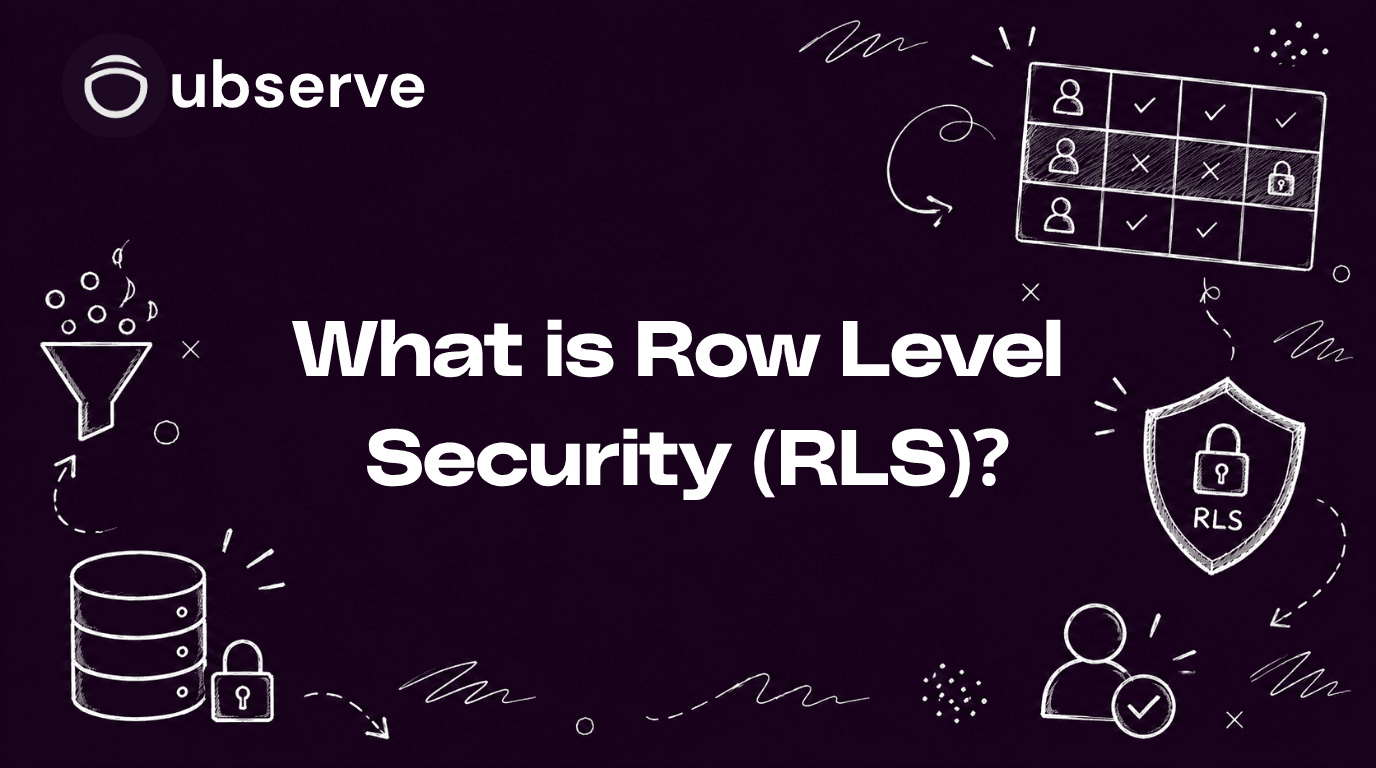
Here's exactly how RLS works, how to turn it on in Supabase, and the specific ways policies fail silently even when they're enabled.
These guides explain the pattern. Ubserve checks whether the same issue is live in your app and returns fix-ready evidence.